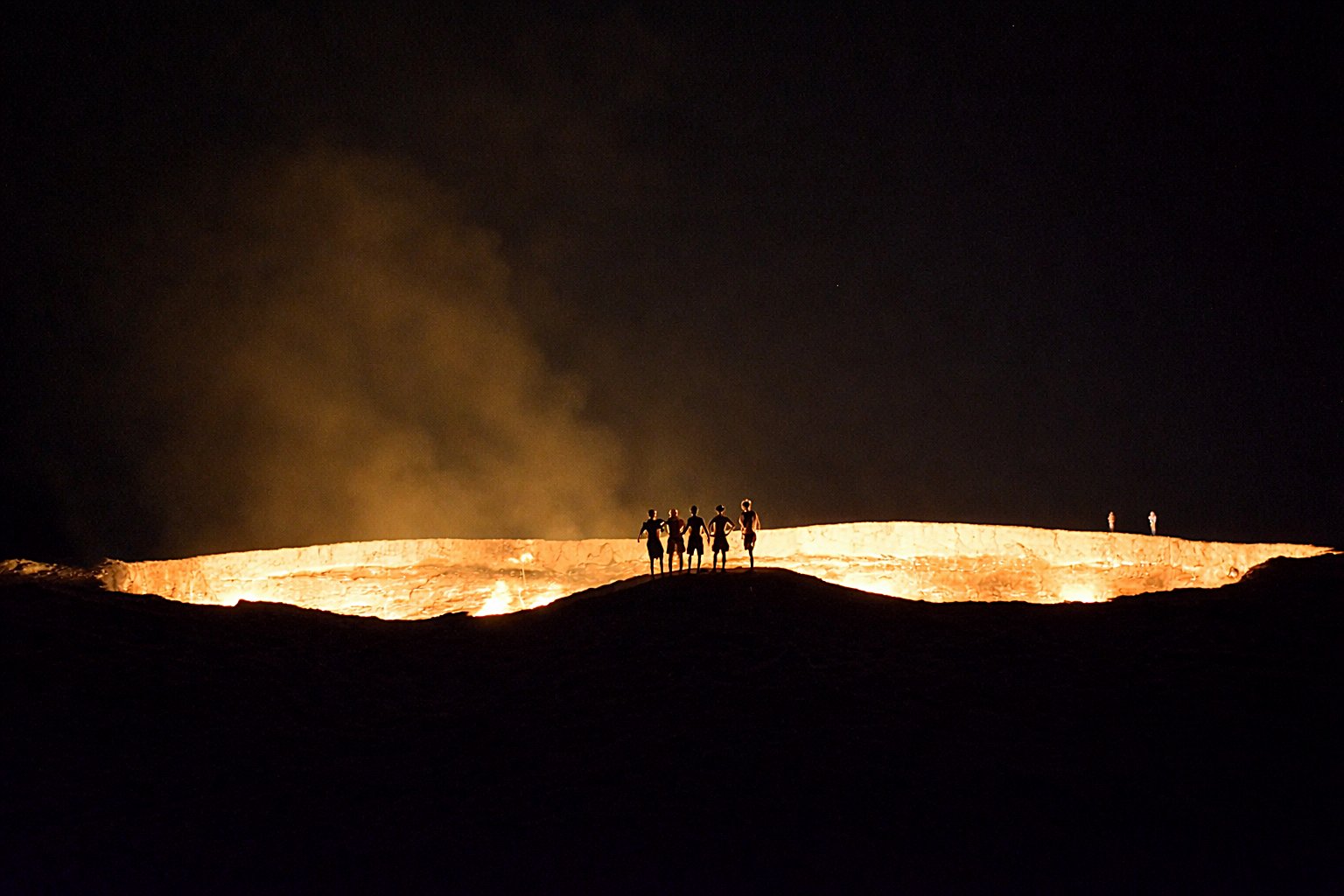
Darvaza Gas Crater, Turkmenistan
Political Economy · History · IR

Jonathon P Sine

Student. Scholar. Seeker.

Darvaza Gas Crater, Turkmenistan · 2016
MA, International Political Economy
Johns Hopkins SAIS, 2020
BA, Political Economy
University of Southern California, 2016
About

I think, read, and write about how human societies evolve, function, and flourish. My focus areas span political economy, history, natural science, evolutionary theory, technology, and finance. In 2025 I received an Emergent Ventures grant "to study China." My current research focuses on state capacity, industrial policy, and the deep history of state development.

One of my passions is fishing for experiences that change my mental models. I've spent time in 30+ countries, often in interesting fashion, such as driving from London to Mongolia in a run-down Nissan Micra or taking a motor rickshaw across the entirety of India. I spent most of 2024 living in China and Taiwan, where among other things I liberated a chicken in a rural village and circumnavigated the island of Formosa by bike, and speak Chinese passably (HSK6).

I believe in a unity of mind and body. For many years I have engaged in weight lifting, calisthenics, and running and recently begun practicing BJJ. At present you will find me in DC, appreciating American infrastructure on WMATA metro or enjoying modern technology atop a OneWheel.

“The refusal of one decent man
outweighs the acquiescence of the multitude.”
Sima Qian, trans. G.R. Barmé, via Simon Leys

Cogitations

Writing that excavates the social scaffolding

2,900+ subscribers · Est. 2021

August 27, 2025

Litigation Nation, Engineering Empire

A review of Dan Wang's Breakneck. Is China an "engineering state" against America the "lawyerly society"?

July 18, 2025

Industrial Colossus: China vs 1950s America

China's global manufacturing share to 2035. The pre-WWI analogy is faulty.

July 15, 2025

The Stalinist Transformation of Russia

A thematic review of Stephen Kotkin's Stalin: Paradoxes of Power.

June 16, 2025

The Life and Times of Xi Zhongxun

The Party's interests come first. Joseph Torigian's magisterial new biography.

February 2, 2025

From Reform to Ruin in the USSR

The Soviet Collapse: Botched reform or entrenched bureaucracy?

April 2, 2024

The Rise and Fall of LGFVs

How China's local government financing vehicles became its most complex economic challenge.

December 2, 2022

The Cold Wind of Historical Nihilism

Lessons from CCP documentaries on the fall of the Soviet Union.

September 30, 2021

Groping the Elephant of Common Prosperity

Common Prosperity is about Common Purpose.

July 6, 2021

The Long Game by Rush Doshi

Hundred-Year Marathon 2.0?

June 30, 2021

The Dialectic of Development

Industrial Policy and the Living Legacy of Internal Colonization.

May 9, 2021

Financialization: Is it Worse in the PRC?

On the conservative financialization thesis and its limits in China.

March 24, 2021

Atomization and the Future of the CPC

On social cohesion, loose sand, and the Party's dilemma.

Full Archive on Substack →
“One always finds one’s burden again. But Sisyphus teaches the higher fidelity that negates the gods and raises rocks. He too concludes that all is well. This universe henceforth without a master seems to him neither sterile nor futile. Each atom of that stone, each mineral flake of that night-filled mountain, in itself, forms a world. The struggle itself toward the heights is enough to fill a man’s heart. One must imagine Sisyphus happy.”
Albert Camus — The Myth of Sisyphus
“We have come to know man as he really is. After all, man is that being who invented the gas chambers of Auschwitz; however, he is also that being who entered those gas chambers upright, with the Lord’s Prayer or the Shema Yisrael on his lips.”
Viktor Frankl — Man’s Search for Meaning
“I did not bow down to you, I bowed down to all the suffering of humanity.”
Fyodor Dostoevsky — Crime and Punishment
“If only there were evil people somewhere insidiously committing evil deeds, and it were necessary only to separate them from the rest of us and destroy them. But the line dividing good and evil cuts through the heart of every human being. And who is willing to destroy a piece of his own heart?”
Alexander Solzhenitsyn — The Gulag Archipelago
“Anyone who fights monsters should see to it that he does not also become a monster. When you look long into an abyss, the abyss looks also into you.”
Friedrich Nietzsche — Beyond Good and Evil
“Hatred is the most accessible and comprehensive of all unifying agents...Mass movements can rise and spread without belief in a God, but never without a belief in a devil.”
Eric Hoffer — The True Believer
“In framing a government which is to be administered by men over men, the great difficulty lies in this: you must first enable the government to control the governed; and in the next place oblige it to control itself.”
James Madison — The Federalist Papers (No. 51)
“Among the laws that rule human societies there is one that seems more precise and clearer than all the others. In order that men remain civilized or become so, the art of associating must be developed and perfected among them in the same ratio as equality of conditions increases.”
Alexis de Tocqueville — Democracy in America
“Of those men who have overturned the liberties of republics, the greatest number have begun their career by paying an obsequious court to the people; commencing demagogues, and ending tyrants.”
Alexander Hamilton — The Federalist Papers (No. 1)
“The worst problem of modernity lies in the malignant transfer of fragility and antifragility from one party to the other, with one getting the benefits, the other (unwittingly) getting the harm, with such transfer facilitated by the growing wedge between the ethical and the legal...Owning a hidden option at someone else’s expense.”
Nassim Nicholas Taleb — Antifragile
“When the facts change I change my mind. What do you do, sir?”
Attributed to John Maynard Keynes
“God, grant me the serenity to accept the things I cannot change, courage to change the things I can, and wisdom to know the difference.”
Reinhold Niebuhr — The Serenity Prayer
“When a measure becomes a target, it ceases to be a good measure.”
Charles Goodhart — Goodhart’s Law
“We modern civilizations have learned to recognize that we are mortal like the others. We were aware that the visible earth is made of ashes, and that ashes signify something. Through the misty bulk of history we perceived the phantoms of great ships laden with riches and intellect; we could not count them. And now we see that the abyss of history is deep enough to bury all the world. We feel that a civilization is fragile as a life.”
Paul Valéry — Crisis of the Mind (1919)
Archive

Earlier Writing & Academic Papers

Essays, book reviews, and academic work from the original collection.

AcademicPrestige in International Relations PDF AcademicFrontier Investor Risk in Uzbekistan PDF ChinaAtomization and the Future of the CCP Pol. EconomyFinancialization: America's Dutch Disease Foreign PolicyConsolidation and Decadence: The Fate of States Foreign PolicyThe Path to Hell is Paved with Righteousness HistoryThe Soviet Intervention into Afghanistan
A tale of ideology, power, and fear
Foreign PolicyPolitics and Pathogens Book ReviewThe Great Wall Mentality
Julia Lovell's The Great Wall
Book ReviewFounding Brothers
Joseph J. Ellis
Book Review21 Lessons for the 21st Century
Yuval Noah Harari
Book ReviewTrade Wars Are Class Wars Book ReviewHistory and Contemplation
Peter Frankopan's The Silk Roads

If you have thoughts about my thoughts, or the ideas strike a chord, reach out.

Connect