The Soviet Intervention into Afghanistan
A Tale of Ideology, Power, and Fear
Russian History
Written: May 7th, 2015
[Disclaimer: I wrote this essay when I was 20. Having recently reread it at 25, I was pleasantly surprised by the cogency and depth of analysis. However, the conclusion of the essay does not quite bring home the analysis with the verve I would have liked!]
The overarching goal of this paper is to examine and elucidate the reasons behind the Soviet invasion of Afghanistan. I have identified, and will use this paper to expound upon, what I believe to be the four critical “spheres of influence” over Soviet decision making in regards to its foreign policy in Afghanistan. These are domestic concerns, ideology, power, and fear.
The reader knows that foreign policy, in general, cannot and does not exist in a hermetic vacuum. Domestic concerns have powerful implications. To understand Soviet policy making in regard to Afghanistan, it is essential that one understand the prevailing circumstances and concerns within the Soviet Union during the period surrounding the Afghan crisis. We will ask the questions and understand the conclusions Soviet policy makers such as Gromyko, Andropov, and Ustinov, drew in determining how policies in Afghanistan would affect Soviet economic interests, border and territorial security, the military, and the government’s legitimacy both at home and in the world community. Similarly, the decision to intervene in Afghanistan cannot properly be made sense of if not considered in the context of a Marxist-Leninist ideology that is responsible for inciting the Soviet belief in worldwide revolutionary socialism. Beliefs, as we know, give rise to action. For the Soviet Union, their ideological beliefs led to their consistent support of regimes, such as that in Afghanistan, which purport to adhere to their ideology. Here we come to another significant point in need of declaration: this paper will work to make a clear and decisive case implicating ideology as the most fundamental source of influence over the Soviet intervention into Afghanistan, as ideology is the lens through which Soviet policy makers derive and comprehend their goals.
With this in mind, it is necessary to now address a crucial question: what, specifically, were the Soviet goals and interests in dealing with Afghanistan? This will be thoroughly addressed in the body of the paper, but at this point it will suffice to say that a Soviet desire for power and influence within the Middle East, a critical region in terms of geopolitical power dynamics, was paramount. Indeed, the desire for power, it will be argued, is an inherently ideological pursuit, for it is only through power that the Soviet Union is capable of exercising and achieving its most intrinsic ideological goals. Power is, moreover, also deeply and inextricably related to fear, for it is only a loss of power that the Soviet Union, or any great power for that matter, truly fears. The Soviet Union thus feared competing foreign powers, namely China, Pakistan, the United States, and their allies whose aim was to undermine and deprive the Soviet Union of its power. Through this paper I will ultimately strive to demonstrate that the exigencies inflicted upon Soviet policy makers by ideological beliefs and subsequently derived conceptions of power and fear led them to drastically miscalculate the situation in Afghanistan, resulting in a quagmire of epic proportions.
The impact of the ideological competition between the Soviets and Americans extends far beyond each countries territorial boundaries. The super powers directly affected the lives of billions of people all over the world in their race for ideological and military supremacy. Melvyn P. Leffler adroitly captures the significance of this competition in the title of his book, “For the Soul of Mankind,” as this truly was an ideological struggle that covered the expanses of the entire globe. Indeed, from the period immediately following Stalin’s death through its collapse in 1991, the Soviet Union pledged, and did, prop up and support numerous socialistic and communistic regimes struggling through wars of “national liberation” in such places as Nicaragua, Ethiopia, Mozambique, Cuba, and, of course, Afghanistan (Ellen Jones, 41).
I contend that the primary motivation for the Soviet intervention in Afghanistan is ideological. This contention is, to some degree, a matter of semantics. As stated in the introduction, power should be considered intrinsically related to ideology, as ideology is the basis through which power is legitimated and the aegis under which it is exercised. Thus power was inherently pursued as a state interest, and as historian Ronald Suny argues, “In a circular way ideology was subordinated to state interests, but interests were understood in terms of ideology” (Suny 299). I also take this argument further by maintaining that fear, an overwhelming driver of action for the Soviet Union, should be regarded as the aversion to losing power, which in turn means that fear is also guided under the aegis of ideology. These concepts are fundamental to my analysis of the Soviet Union’s assessment of interests in Afghanistan.
Before delving into the major deliberations and contemporary concerns that ultimately resulted in the Soviet incursion into Afghanistan, it is first necessary to understand the historical paradigms and processes that set the table for these policy considerations. These historical processes date back to the imperialism of the Romanov dynasty. As David Holloway explicates in his essay on War, Militarism, and the Soviet State, one of the most prominent influences upon the Soviet state was the military-political tradition inherited from Tsarism (Holloway 5-8). Moreover, the consolidation of power undertaken by the Bolsheviks in 1917, and the process of militarization under Trotsky through which they were able to maintain power, led them to a congenital disposition towards militarism. The militaristic and mechanistic fervor that the Soviet Union came to power under was similarly harnessed in the rush to industrialization under Stalin and his 5-year plans, which has, specifically since the beginning of World War 2, been a counterpart to military industrialization. The “Great Patriotic War,” as Russia’s war against Germany was known under Stalin, provided the country with a “military-technical revolution” that firmly positioned it as the preeminent military superpower in Europe and Asia. But, despite now being a military superpower, the Soviet Union was still, and would continue to be, economically weak. This point on the economy is crucial to understanding its policy relations as they would take shape in regards to Afghanistan, as the Soviets would come to use “arms transfers and military advisors as a major instrument of diplomacy” (Holloway 11).
While the Soviet economy has always, much to their chagrin, been a source of weakness, it became especially troublesome under Brezhnev. In the two decades prior, under both Stalin and Khruschev, the Soviet Union experienced relatively high rates of economic growth and seemed poised to reach economic parity with industrialized western nations. Khrushcev’s economic reforms which loosened the central economic planning in favor of regional economic councils seemed to spur growth in the agrarian and industrial sectors, as annual growth rates, measured by gross national product, were at roughly five to six percent in the 1960s (McCauley 352). It is, however, a point of historical contention as to when the “boom” era in the economy ended and “Brezhnevian stagnation” set in. Nonetheless, it is widely agreed that by 1973 stagnation was in full swing. The reasons for stagnation are also the subject of dispute, but there are three main culprits: an inefficient and cumbersome central command bureaucracy, lack of innovative economic reforms under Brezhnev, and unsustainable levels of defense spending. As a result of economic stagnation, consumers were finding goods, and basic food commodities, to be scarce. Labor inputs increasingly required larger expenses by the state, and despite increased spending in the both industrial and agricultural sectors, food shortages and consumer good shortages were the norm. Long queues formed for basic rations, and the hardships were further compounded by intermittent droughts that forced the Soviet Union to import large quantities of grain from the United States (McCauley 352). All of these domestic factors coalesced to foster Soviet insecurity, which, in conjunction with international concerns over American foreign policy, likely compounded the Soviet need to ensure the strength of its geopolitical power dynamics, particularly close to home. This became apparent in its management of Afghanistan.
The situation on the ground in Afghanistan was complicated to the say the least. Since 1963 Afghanistan had undergone several regime changes and violent coup-d’états. By the end of 1978 Nur Mohammad Taraki and Hafizullah Amin had risen to preeminence within the country and headed the People’s Democratic Party of Afghanistan, or PDPA for short. Within the PDPA two rival factions had emerged and was split between the Khalqs (The Masses) and Parchams (The Banner). Taraki and Amin headed the Khalq faction that rose to power. It was the more militant of the two and maintained a traditional view of Marxism, whereas the Parchams, headed by Babrak Karmal, was substantially closer in ideological beliefs to Moscow orthodoxy (Garthoff 982). The primary problem for the Taraki and Amin government of the PDPA, and the one that would prove most ruinous for the Soviet Union, was the staunch opposition of the devoutly Islamic population of Afghanistan to liberalizing reform movements. Keep in mind that in the 1970s, Afghanistan was one of, if not the most, illiterate, impoverished, religious, and by almost any measure of the term, and certainly by Soviet standards, “backwards” nations in the world. Secularization, education of women, and de-vailing were among the reforms most prominently opposed by the populous. These and other modernization attempts sparked large protests and “violated practically every Afghan cultural norm” (Garthoff 990). The PDPA was quickly proving incapable of governing its own country as its military, which was largely conscripted and sympathetic to Islamic concerns, began defecting en masse, even losing entire battalions at a time. It was in this light in 1978 that Taraki first began to request outright military assistance from the Soviet Union.
Supplying ammunitions and military advisors to Afghanistan was a strategy the Soviets had long pursued prior to 1978, and was also the strategy of choice pursued in several other countries throughout the world. The assistance rendered was done so in accordance with the Brezhnev Doctrine which, in opposition to the Truman Doctrine, discretionarily promised to give assistance to any struggling socialistic regime (Domber). During the period from 1956-77, the Soviets delivered more than $600 million worth of military supplies, trained thousands of Afghan soldiers, and backed them with roughly 350 military advisors (Collins 21). But while providing supplies, training, and aid may have been commonplace, military assistance in the form of boots on the ground was not. Indeed, prior to 1979, the last publicized instance of armed conflict directly involving the Soviet Union was 1968 in Czechoslovakia, where the Soviets crushed the local government that was instituting liberal, economic and social reforms in a movement now known as the Prague Spring. The international fallout for the Soviets over this incident was significant and, while somewhat ephemeral, likely more than they had anticipated. Indeed, Soviet policy makers, in their private deliberations over Afghanistan, seemed to have taken to heart the worldwide condemnation of the events in Czechoslovakia, understanding and ruminating on the depth of seriousness that military entanglement would entail, only, as it would turn out, to forget these lessons. The idea of militarily intervening in Afghanistan nonetheless became the subject of intense discussion. During these deliberations Brezhnev was conspicuously absent. Instead, they were conducted almost exclusively by five key Soviet political strategists: Gromyko, the Minister for Foreign Affairs, Andropov, head of the KGB, Ustinov, Minister of Defense, as well as Kosygin and Ponomarev (“Politburo Discussions on Afghanistan”). But this will be covered in more detail further on.
Prior to 1979, the policies the Soviets pursued in Afghanistan were spurred largely by both domestic concerns over geopolitical border interests as well as by ideological concerns. Indeed, considering how underdeveloped and “backwards” Afghanistan was considered to be by the Soviets, it is hard to see how it would have been of use to them unless it were to serve as either a buffer state or as a haven from which to launch further incursions into the region. Furthermore, by 1955 America had overtly begun to support Afghanistan’s new neighbor, Pakistan (Garthoff 983). This undoubtedly spurred the Soviet Union to consider it even more imperative to lend support to Afghanistan so as to ensure America’s practice of containment and encirclement could not reach any closer to home. In order to maintain border security, the Soviets had to ensure that Afghanistan remained stable, secure and friendly. With the PDPA regime floundering, however, the Soviets became fearful of the idea that the United States and other foreign powers would be able to gain influence in Afghanistan, yet again undermining Soviet power and thereby delving another blow to the Soviet’s ideological pursuit of inspiring worldwide socialist revolution. As Gromyko makes clear: “under no circumstances can we lose Afghanistan … if we lose Afghanistan now, if it goes away from the Soviet Union that will deal a strong blow to our policy” (Garthoff 992).
Despite temporary respites, it has historically been true that Soviets and Americans have continuously attempted to undermine each other’s ideological influence, authority, and power. Afghanistan is a case in point. Zbigniew Brzezinski, former National Security Advisor, famously wrote to President Jimmy Carter on December 24th, 1979, the day the Soviets invaded Afghanistan, saying that “we now have the opportunity of giving to the USSR its Vietnam War.” This quote is incisive. Given the fact that Brzezinski wrote this to carter after the Soviet incursion, one may be inclined to view the United States desire to embroil the Soviets in a long and cumbersome war as opportunistic and reactionary. This is not entirely correct. Indeed, as the Soviets had long expected (likely overestimating the actuality of the situation), the United States had, since July 3rd, 1979, been covertly aiding opponents of the pro-Soviet regime in Kabul (“The CIA’s Intervention in Afghanistan”). Of course, the Soviets had no way of knowing this with certitude at the time, but paranoia was never in short supply in the Soviet Union.
However, over the course of the 1960s and early 1970s, there was an ostensible sense that the United States and Soviet Union had been slowly but surely rehabilitating and deescalating relations with one another. Non-proliferation agreements, SALT I, SALT II. But the reality of the situation belies the attitude of reconciliation. Under Brezhnev there were significant increases in military expenditures. Beginning in the 1970’s low-ball estimates place annual increases in defense spending at roughly 5-6 percent per year (Firth & Noran 171). Indeed, these military expenditures, undertaken as they were, directed funds away from other vital parts of an already floundering Soviet economy. By these actions, it is evident that the Soviets had other concerns on their minds over and above conciliatory relations with the U.S. and even over the structural integrity of the economy.
Recently publicized transcripts of Politburo meetings shed light on the true concerns of Soviet ideologues. One facet of these concerns, and a demonstration of their perception of the situation in Afghanistan, is expressed by Kosygin in a meeting in March following major attacks in Herat: “It is clear that Iran, China, and Pakistan will come out against Afghanistan, and do everything within their power and means to contravene the lawful government and discredit its actions” (“Politburo Discussions on Afghanistan”). As Raymond Garthoff makes evident in his analysis in Détente and Confrontation, there were well founded reasons for the Soviets to suspect and indeed fear such foreign involvement and resistance, particularly from China through Pakistan, as new and direct overland supply channels between the two countries had just recently been established “near the Wakhan Corridor of eastern Afghanistan” (1030). However, when the Soviets began publishing articles in Pravda that were designed to “expose the interference in the internal affairs of Afghanistan on the part of Pakistan, Iran, the USA, and China” the extent of their concern was massively exaggerated, serving primarily to obfuscate and distort public perception of the crisis (“Politburo Discussions on Afghanistan”).A Pravda article published on March 19 mendaciously states that Egypt, Pakistan, and China, as well some Western countries, are to blame for the uprising in Herat (“The Intervention in Afghanistan and the Fall of Detente”). Internal Politburo assessments of the situation in Afghanistan clearly show an understanding on the part of Soviet politicians that the problem in Herat, and Afghanistan generally, was largely emanating from Amin and Taraki’s unpopular government struggling to control a religiously fanaticized population. Thus while the Soviets truly were concerned about foreign intrigue, the party’s public treatment of the situation was clearly meant to obfuscate the multitude of other interests they had in Afghanistan.
It is now pertinent to return to a question posed at the beginning of the paper: what interests does the Soviet Union have in regards to Afghanistan? It has been argued that one possible interest underpinning Soviet actions in Afghanistan may be related to an interest in establishing a “warm-sea” port and simultaneously gaining control over the regions oil reserves. This was certainly one of the foremost contentions of the United States in calculating Soviet motives in Afghanistan, as Jimmy Carter makes clear in his State of the Union address in January of 1980:
“The region which is now threatened by Soviet troops in Afghanistan is of great strategic importance: It contains more than two-thirds of the world’s exportable oil. The Soviet effort to dominate Afghanistan has brought Soviet military forces to within 300 miles of the Indian Ocean and close to the Straits of Hormuz, a waterway through which most of the world’s oil must flow. The Soviet Union is now attempting to consolidate a strategic position, therefore, that poses a grave threat to the free movement of Middle East oil” (Carter).
There is undeniable historical evidence of Russian interests in establishing strategic oceanic ports, and warm sea ports in particular. We see this tendency beginning with Peter the Great, who established Russia’s first navy and went to war with various powers, such as Sweden and the Ottoman Empire, in order to achieve such ends. The imperialist search for ports continued under Catherine the Great, whose war with the Ottoman Empire resulted in the treaty ofKuchuk-Kainarji in 1774 that enabled Russia to acquire an outlet to the Black Sea (“Russia Imperial Expansion and Maturation”). Indeed, Russia has, since time immemorial, had an interest in acquiring strategically important ports, and this is likely no less true in 1980 than it was in 1780. However, one must give respect to the paucity of palpable evidence that supports the conclusion that the Soviet Union was intervening in Afghanistan as part of a larger plan to acquire access to the Indian Ocean and the Straits of Hormuz. Nonetheless, motives and interests do conveniently align, as establishing a base of control in the Middle East would give the Soviet Union great ability to change existing power dynamics in the region, establish a base from which to further pursue geostrategic interests, and potentially disrupt the United States’ oil supply chain.
Clearly the Soviet Union has a vested geopolitical interest in Afghanistan given its shared borders and its proximity to areas of significant importance, both to the Soviets and the United States. What has not yet become apparent in this analysis is the concern the USSR also felt over the rising tide of Muslim fanaticism. The Soviets have expressed, at least, moderate concern over its own population becoming exercised by fundamentalists in Afghanistan, Iran, and Pakistan. This is likely because the Soviet Union contained the fifth largest Muslim population in the world during the Cold War, and as is demonstrated in “The World Was Going Our Way,” the Soviets have, since 1943, put in place a subservient hierarchy over their Muslim subjects that has attempted to penetrate and influence their lives and traditions (Andrew & Mitrokhin 369-372). Following the “Islamic revolution” in Iran at the end of the 1970s the Soviet Union became increasingly concerned about its Muslim subjects in the Caucasus and Central Asia and, despite attempts at cajoling them into compliance, the undeniable truth was that Muslims under the influence of the Soviet Union “looked far more to Mecca than to Moscow” (380). Available evidence seems to suggest, however, that the worries over Muslim unrest within the Soviet Union played a very minor factor in determining policy in Afghanistan. What did command the attention of the Soviet command, however, was swelling opposition of the Muslim population both in and around Afghanistan to the rule of the Taraki and Amin regime. Following Taraki’s death (or, arguably, assassination) and Amin’s rise to power in September 1979, the concern within the Soviet leadership over Amin, whom they never trusted to begin with, and his ability to manage the country, heightened significantly as his government’s grip on control grew viscerally looser and the Mujahedeen and other Islamic groups grew more powerful.
Within the Soviet leadership a triumvirate, composed of Gromyko, Andropov, and Ustinov, arose that came to control Soviet policy in Afghanistan. While certainly concerned about the role that foreign powers had in influencing and exacerbating the radicalization of the Muslim population in Afghanistan against the Amin regime, they came to view the Amin regime itself as the primary source of the Muslim population’s discontent. In the meeting of the Politburo to discuss Afghanistan on March 17th, both Gromyko and Ustinov expressed concern over the Afghan regime’s lack of legitimacy amongst its own population. Furthermore, they also questioned whether deploying troops in order to support an unpopular regime would be the most prudent military strategy (“Politburo Discussions on Afghanistan). With this in mind, let us give brief consideration to historical influences on the attitudes of these three men towards military conflict. It is well known that Andropov had served as the Soviet ambassador to Hungary during the 1956 intervention and was a staunch supporter of the Soviet military intervention. Additionally, a year after he had become KGB Chairman, he was one of the chief advocates of the military invasion of Czechoslovakia (Andrew & Mitrokhin 398). Indeed, all three of these men were historically hawkish, and not a single one publically or privately expressed deep opposition to the idea of sending in troops to Afghanistan. Men such as Kosygin who expressed fears of formidable backlash if Soviet troops were sent in proved to be relatively inconsequential in formulating the ultimate policy decisions. Indeed, as deliberations progressed, only the opinions of Gromyko, Ustinov, and Andropov would seriously matter, and it soon became increasingly taboo, and even politically dangerous, to question the reasoning of this triumvirate.
As Andrei Grachev elucidates in his book “Gorbachev’s Gamble” it was typical for an individual who insisted on a position contradictory to that maintained by the triumvirate to find himself severely reprimanded for “interference in spheres beyond [his] competence” (Grachev 176). This exemplifies what would grow to fundamentally characterize the policy making process over the situation in Afghanistan. Namely, that Gromyko, Andropov, and Ustinov increasingly sought only each other’s own opinions and advice, freezing out all others. Brezhnev, who never showed much interest in Afghanistan anyways, was by 1979, according to a doctor who observed him at the Vienna summit, already looking “eerily like a zombie being wheeled from point to point, with only minimal comprehension of his surroundings” (Gates 117). As such, Brezhnev served primarily as a rubber-stamper for the policy decisions of the triumvirate. The interventionist solution that the triumvirate struck was this: depose Amin and his regime and introduce a new, more broadly supported regime that would be able to reduce support for the insurgents.
One must ponder what sort of thinking would have led to surmising this strategy as optimal. Indeed, the efficacy of this policy was widely questioned outside of the narrow quarters of these policy makers. But it is abundantly clear that the political planners were obstinate in their views, as Garthoff informs us, “it is now known from several sources that all three top military planners resisted the idea” of Soviet intervention. Moreover, when Marshal Orgarkov, Chief of the General Staff, warned of the severe political and military consequences of dispatching troops, he was told by Ustinov that “We have people who deal with politics. Your main task is to secure the fulfillment of the military side of political decisions that are taken” (Garthoff 1015). When one understands the general ineptitude of politicians in matters of military strategies and tactics, it would seem tactful to defer to the expertise of the military command on matters of such importance. This is, however, not the strategy that was pursued by these three men. Indeed, the precise opposite seems to have occurred, as Soviet advisors in Afghanistan that reportedly opposed the idea of a military intervention were recalled and replaced by those supportive of the plan (Garthoff 985).
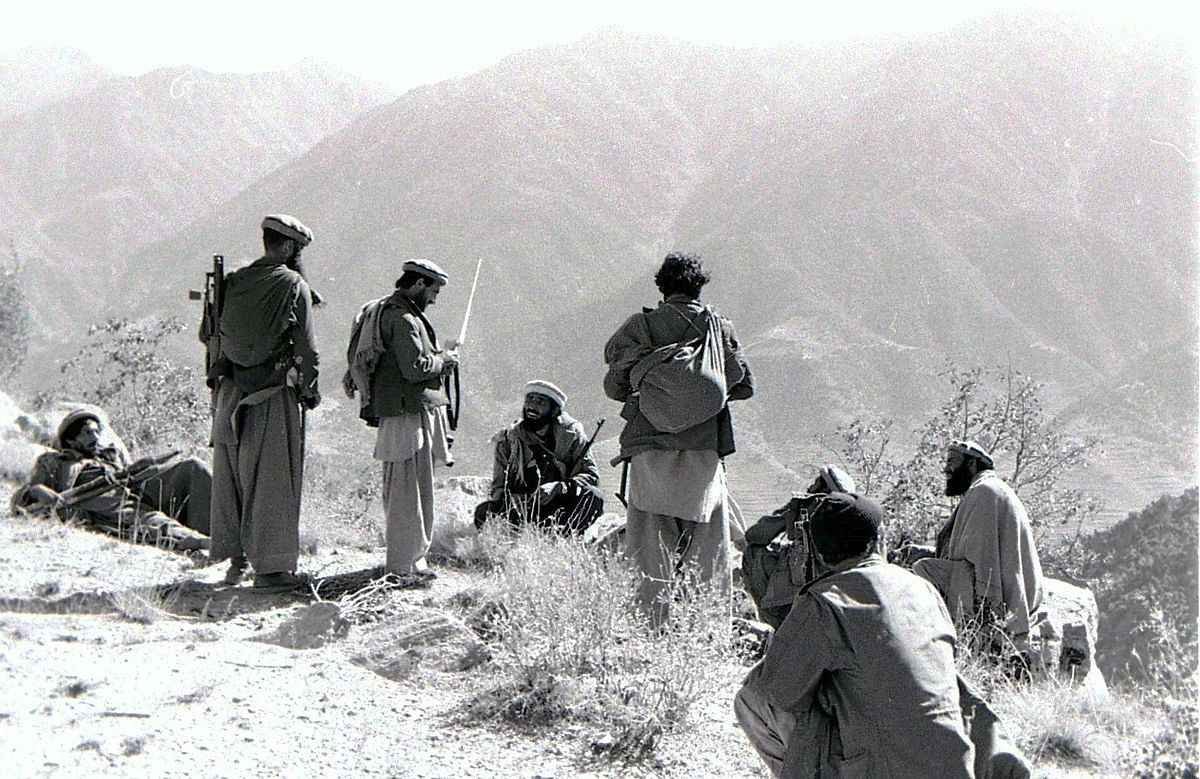
A massive amount of willful delusion, ignorance, and hubris in their ideological convictions went into the deliberations made by the so called ‘Afghanistan Commission.’ The pervasive belief amongst the top political advisors, Gromyko, Ustinov, and Andropov, was that the majority of the opposition against the Amin regime should be chalked up to his systemic oppression and crude and militant ways of attempting to implement Marxist reforms. The rest of the opposition, they believed, could be considered the product of American, Chinese, Egyptian, and Iranian support being tunneled through Pakistan. It is important, again, to note that these beliefs, while misguided, were not entirely erroneous. The cruelties of the Amin regime are well documented, and indeed, as mentioned earlier, Amin’s aggressive attempts to hoist liberalizing reforms upon a deeply unreceptive populous resulted in much backlash and outrage. And, as George Crile brings to light in his book “My Enemy’s Enemy”, the CIA did indeed organize and direct a massive program supporting Islamic oppositionists, which was also aided and abetted by countries as diverse as China, France, Iran, Pakistan, Egypt, and Saudi Arabia. Indeed, as a result of this program a significant amount of funding, weapons, and training, were given to Islamic organizations that are now considered to be the progenitors of modern groups like Al-Qaeda and the Taliban (Crile 142). But here is the critical point that Soviet strategists could not grapple with: to Muslims, especially those living in Afghanistan, most of whom were illiterate and indoctrinated by the tenets of their faith, any political system that was not backed by Sharia, or attempted to separate them from their beliefs and their God, would clearly be rendered unappealing and viewed as hostile. Thus operation AGAT, launched by the Soviets just days after their intervention in Afghanistan, which killed Amin and his leadership, replacing them with a handful of Parchams, handpicked by the Soviets and headed by Babrak Karmal, was a plan that was destined to fail (Andrew & Mitrokhin 402).
Perhaps the Soviet leadership did, at some level, understand the futility of this plan. Certainly their top military advisors did. But as Gromyko put into plain language back in March of 1979, there was absolutely no way the Soviet ideologues were going to allow Afghanistan’s friendly, socialist, government to fail. It was simply too strategically important, too close to home, and had already been given too much aid to be allowed to falter. Additionally, the Soviets also feared that the Americans and their capitalist ideology might then be able to gain a foothold right in the USSR’s backyard. Under this logic, the Soviets may have felt that there was simply no other way out besides military intervention. This is an argument that Garthoff elucidates and gives credence to in Détente and Confrontation (1033-1036). While this argument is persuasive and certainly may have been a driving factor in the decision making, I do not view it compelling enough to entirely explain the Soviet intervention. Rather, I believe that ideology is the key to unraveling this mystery. Discussions over, and with, Amin clearly demonstrated a belief among the Soviets that Amin was not properly following Marxist-Leninist prescriptions for socialist revolution, as he was attempting a rush towards socialism at a pace that was much too fast for a country as underdeveloped as Afghanistan (“Politburo Discussions on Afghanistan”). Indeed, ideology is clearly implicated here as the Soviets thought the answer to quelling the unrest caused by Amin was to replace him with Babrak Karmal, a Marxist who would follow Moscow’s directives and slow down the pace of revolutionary restructuring. The Soviets then made two critically incorrect assumptions in their planning. First, that a small force of roughly 75,000 Soviet soldiers would be sufficient enough to enter a verifiable war-zone and liquidate the non-cooperative extremists in a timely fashion, and second, that by installing a government that was following the ‘correct’ approach to socialist revolution, the Muslim population would deescalate and come to view this new communist government as legitimate.
How could the Soviet leadership and their assumptions about the situation in Afghanistan be so egregiously erroneous? The light of historical hindsight allows us to develop a picture that paints Soviet beliefs as not only misguided, but perhaps fantastical. Official reports from the Soviet Union have put the casualty toll for the conflict, which finally ended under Gorbachev in 1989 after a staggering 9 years, at around 50,000 soldiers, including 13,310 fatalities and 35,478 wounded (Taubman). If we accept these numbers as legitimate (they may be slightly underreported), then a full two-thirds of the initial 75,000 troops garrisoned can be considered casualty victims.
At the beginning of this paper I reminded the reader that foreign policy decisions are not conducted in hermetically sealed environments. We have seen that Soviet insecurity over the frailty of their economy may have led them to use military force in Afghanistan as a way of compensating for their inabilities to provide sufficient economic support, and was also perhaps a way to compensate for the unpopularity of their ideological beliefs in the region. However, while foreign policy may not have been conducted in a hermetically sealed environment, that is precisely the type of environment that Soviet ideological beliefs survived and thrived within. For decades the Soviet Union had dogmatically asserted the veracity of their Marxist-Leninist ideology, often killing, imprisoning, ridiculing, or excommunicating dissenters. Indeed, Soviet leaders have been completely indoctrinate by the tenets of this faith. The parallels between dogmatic beliefs in Marxist-Leninist ideology and beliefs in Islam are poignant. The Soviets considered their world view to be so correct and persuasive that they could not adequately foresee a situation wherein the Afghan population would, if properly exposed over time, not come to submit to the value of this system. Andropov, Ustinov, and Gromyko did not comprehend that the Afghan population had their own dogmatic views about the way the world works, and that these views were incompatible and hostile to those of the Soviets.
These policy makers were also distracted, at least in part, by ideologically motivated fears over the possibility of America and its capitalist system gaining influence in Afghanistan. It is also likely that they attributed too much credit to America, and her allies, for causing the deeply-rooted anti-Soviet, and anti-Marxist, pretensions within the Afghan population. It should be apparent, however, that all of these considerations are underscored by a systematic Soviet desire for power. For the Soviets, power has always been inherently tied to ideology, as power is what gives them the ability to exert their beliefs and influence the course of world events. Indeed, it is ideology that has given the Soviets their motives to desire power and also provided them with a basis with which to fear the loss of it. Ideology, power, and fear are, like the members of the Afghan Commission, the powerful triumvirate that conspired to motivate and justify the misguided policies that coalesced into the quagmire known as The Soviet Intervention into Afghanistan.
Work Cited
Andrew, Christopher M., and Vasili Mitrokhin. The World Was Going Our Way: The KGB and the Battle for the Third World. New York: Basic, 2005. Print.
Carter, Jimmy. “State of the Union Address 1980.” Selected Speeches of Jimmy Carter. Jimmy Carter Library. Web. 3 May 2015. http://www.jimmycarterlibrary.gov/documents/speeches/su80jec.phtml.
“The CIA’s Intervention in Afghanistan.” CRG. Center for Research on Globalization, 1 Jan. 2001. Web. 3 May 2015. http://www.globalresearch.ca/articles/BRZ110A.html.
Collins, Joseph. “The Use of Force in Soviet Foreign Policy: The Case of Afghanistan.” Conflict Quarterly (1983): 20-43. Web. http://journals.hil.unb.ca/index.php/JCS/article/viewFile/14592/15661.
Crile, George. My Enemy’s Enemy: The Story of the Largest Covert Operation in History - the Arming of the Mujahideen by the CIA. London: Atlantic, 2003. Print. 142
Domber, Gregory. “Book Review Matthew J. Ouimet , The Rise and Fall of the Brezhnev Doctrine in Soviet Foreign Policy . Chapel Hill : The University of North Carolina Press , 2003 . 309 Pp.” Journal of Cold War Studies: 186-88. Print.
Firth, Noel E., and James H. Noren. Soviet Defense Spending: A History of CIA Estimates, 1950-1990. College Station: Texas A & M UP, 1998. Print.171
Garthoff, Raymond L. Détente and Confrontation: American-Soviet Relations from Nixon to Reagan. Washington, D.C.: Brookings Institution, 1985. Print.
Gates, Robert Michael. From The Shadows: The Ultimate Insider’s Story of Five Presidents and How They Won the Cold War. New York, NY: Simon & Schuster, 1996. Print.
Grachev, A. S. Gorbachev’s Gamble: Soviet Foreign Policy and the End of the Cold War. Cambridge: Polity, 2008. Print.
Holloway, David. War, Militarism, and the Soviet State. New York, N.Y.: World Order Models Project :, 1981. Print.
“The Intervention in Afghanistan and the Fall of Detente.” George Washington University. National Security Archive. Web. 3 May 2015. http://nsarchive.gwu.edu/carterbrezhnev/docs_intervention_in_afghanistan_and_the_fall_of_detente/fall_of_detente_chron.pdf.
Jones, Ellen. Red Army and Society: A Sociology of the Soviet Military. Boston: Allen & Unwin, 1985. Print.
McCauley, Martin. The Rise and Fall of the Soviet Union. Harlow, England: Longman, 2008. Print.
“Russia Imperial Expansion and Maturation: Catherine II.” Country Studies. Library of Congress. Web. 3 May 2015. http://lcweb2.loc.gov/cgi-bin/query/r?frd/cstdy:@field(DOCID ru0021).
Suny, Ronald Grigor. The Soviet Experiment: Russia, the USSR, and the Successor States. New York: Oxford UP, 1998. Print.
Taubman, Philip. “Soviet Lists Afghan War Toll: 13,310 Dead, 35,478 Wounded.” The New York Times. The New York Times, 25 May 1988. Web. 3 May 2015. http://www.nytimes.com/1988/05/26/world/soviet-lists-afghan-war-toll-13310-dead-35478-wounded.html.
“Transcript of CPSU CC Politburo Discussions on Afghanistan” March 17, 1979, History and Public Policy Program Digital Archive, TsKhSD, f. 89, per. 25 dok.1, ll. 1, 12-25. http://digitalarchive.wilsoncenter.org/document/113260.