On Deterring Chinese Economic Coercion of New Zealand
Authoritarian regimes in Russia and China are presently engaged in an unprecedentedly expansive political warfare campaign.[1] China, in particular, has mobilized the entirety of its national power as a means to manipula...
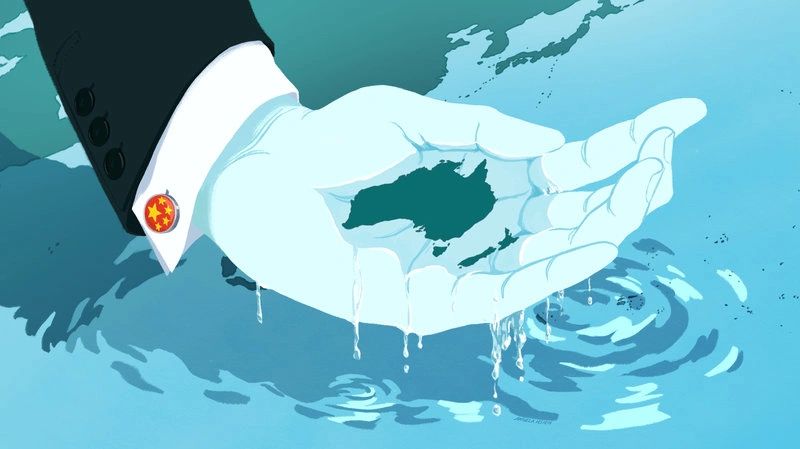
Authoritarian regimes in Russia and China are presently engaged in an unprecedentedly expansive political warfare campaign.1Babbage, Ross, “Winning Without Fighting: Chinese and Russian Political Warfare Campaigns and How the West Can Prevail” Center for Budgetary and Strategic Assessments. 2019. China, in particular, has mobilized the entirety of its national power as a means to manipulate and coerce countries.
New Zealand, as many reports have made clear, is one of the core targets of Chinese political warfare, particularly from China’s United Front Work Department.2See Canada’s intelligence services assessment in Chapter 7 of “CHINA AND THE AGE OF STRATEGIC RIVALRY Highlights from an Academic Outreach Workshop,” Canada Security Intelligence Service, May 2018. https://www.canada.ca/content/dam/csis-scrs/documents/publications/CSIS-Academic-Outreach-China-report-May-2018-en.pdf As Anne-Marie Brady speculates, New Zealand may even be a test case for China to practice influence operations upon.3“New Zealand professor Anne-Marie Brady who wrote about China’s foreign influence seeks government protection after year-long harassment campaign,” The Guardian, in South China Morning Post https://www.scmp.com/news/asia/australasia/article/2176618/new-zealand-professor-who-wrote-about-chinas-foreign-influence Yet while the influence operations have thus far been primarily political, as China’s economic heft continues to rapidly increase, there is a growing plausibility that New Zealand could face economic coercion from Beijing should it make moves that displease the CCP. The chances of this happening are not insignificant, and there is already a long list of countries who have faced CCP-directed economic coercion.4Peter Harrell, Elizabeth Rosenberg, and Edoardo Saravalle, “China’s Use of Coercive Economic Measures,” Center for a New American Security, 2018. New Zealand must, therefore, be prepared to confront and overcome economic coercion from Beijing.
It is imperative to understand that for the Chinese Communist Party (CCP), the totalitarian regime ruling over the middle kingdom, the number one priority is to maintain its grip on power. In order to do this, the CCP must maintain legitimacy in the eyes of the Chinese public. Presently, the CCP’s legitimacy is maintained through two pillars: economic growth and national pride. In recent years, Xi Jinping has left behind Deng Xiaoping’s ‘biding time and hiding strength’ in favor of ‘striving for achievements,’ while taking Jiang Zemin’s ‘Going Out’ policy and expanding and institutionalizing it via the Belt and Road Initiative (BRI). Furthermore, as Robert Putnam’s two-level game framework elucidates,5Putnam, Robert, “Diplomacy and Domestic Politics: The Logic of Two-Level Games.” International Organization. 1988. BRI appears to be an international investment strategy that, as the primary instrument for achieving Xi’s ‘China Dream’ (a term derived from Liu Mingfu)6Liu, Mingfu. The China Dream: Great Power Thinking and Strategic Posture in the Post-American Era (CN Times Books Inc.) 2015. and the ‘rejuvenation of the Chinese nation,’7Economy, Elizabeth, Excerpt from “The Third Revolution: Xi Jinping and the New Chinese State.” 2018 https://www.cfr.org/excerpt-third-revolution simultaneously allows for the expansion of China’s domestic economic growth potential while also inspiring Chinese people’s sense of nationalistic pride. Understanding how crucial BRI has become in maintaining the CCP’s two pillars (economic growth and nationalism) of legitimacy is crucial.
In order to properly anticipate potential economic coercion measures Beijing could take against New Zealand, it behooves us to reflect on New Zealand’s vulnerabilities while reviewing previously documented instances of Chinese economic coercion. As Blackwill and Harris note in their book on geoeconomic statecraft, “China is often correctly described as the world’s leading practitioner of geoeconomics,” or using economics for political ends.8Robert D. Blackwill and Jennifer M. Harris. (2017). War by Other Means: Geoeconomics and Statecraft (Cambridge, MA: Harvard University Press), pp 93. A 2018 report from the Center for a New American Security confirms this and finds that China has now utilized economically coercive tools against 9 countries.9The 9 are: Japan, Norway, Philippines, Taiwan, Mongolia, South Korea, Australia, Iran, and North Korea Beijing utilizes five general economically coercive mechanisms: popular boycotts, import restrictions, export restrictions, corporate pressure, and tourism restrictions.10Peter Harrell, Elizabeth Rosenberg, and Edoardo Saravalle, “China’s Use of Coercive Economic Measures,” Center for a New American Security, 2018.
When attempting to counter an opponent, it is crucial to know one’s own vulnerabilities, particularly vis-à-vis that opponent. For New Zealand, there are several vulnerabilities to Chinese influence and coercion, particularly in light of China’s above listed coercive economic stratagems. To begin, we must recognize China has already thoroughly plied the political fields in New Zealand, as Anne Marie Brady has painstakingly shown (she and her family have been subject to serious harassment).11Graham-McLay, Charlotte, “Fingers Point to China After Break-Ins Target New Zealand Professor,” New York Times, September 21. 2018. The CCP’s United Front Work Department uses Chinese media influence operations, corrupt donations and inducements directed towards powerful political figures, and generally woos key political constituencies with the express goal of instantiating a ‘friendly’ view of China within New Zealand.12Brady, Anne-Marie, “Magic Weapons: China’s political influence activities under Xi Jinping,” Wilson Center, 2017. https://www.wilsoncenter.org/sites/default/files/for_website_magicweaponsanne-mariesbradyseptember2017.pdf Economically, there are three domains where New Zealand is liable to be vulnerable to potential Chinese economic coercion: first, China is both New Zealand’s largest import and export partner13New Zealand, MIT’s economic complexity: AJG Simoes, CA Hidalgo. The Economic Complexity Observatory: An Analytical Tool for Understanding the Dynamics of Economic Development. Workshops at the Twenty-Fifth AAAI Conference on Artificial Intelligence. (2011), which gives it substantial leverage to potentially block or alter trade; second, New Zealand takes in a large number of Chinese students, who pay top-dollar for their education, and has a tourist industry catering to a robust number of Chinese mainlanders (roughly 450,000 a year), and Chinese threats to curtail both have already been hinted at14Graham-McLay, Charlotte, “New Zealand Fears Fraying Ties with China, Its Biggest Customer,” New York Times, February 14, 2019. https://www.nytimes.com/2019/02/14/world/asia/new-zealand-china-huawei-tensions.html; and, third, many New Zealand companies and workers rely on China for their livelihoods, and are thus a vulnerable constituency China could politically target.15Olsen, Brad, “Assessing China’s Importance to Regional New Zealand,” Infometrics, February 26, 2019. https://www.infometrics.co.nz/assessing-chinas-importance-regional-new-zealand/
Unfortunately, the CCP has proven itself to be a coercive regime that, building on its Maoist and Leninist heritage, is still engaged in a global struggle to achieve political ends (although these ends no longer entail proletariat revolution). It views its relationships with other countries instrumentally and has been willing to coerce them if doing so becomes expedient. Furthermore, its morally bankrupt behavior at home, and well-documented corrupt and repressive practices, increase the likelihood that countries like New Zealand, valuing human rights and freedom, will eventually take a moral stand against it. As such, New Zealand must be prepared for the day when Beijing attempts to cajole it into compliance via the same sort of economic coercive measures it has used elsewhere. Toward this end, I propose two ‘response suits’: a tepid and an aggressive variant that New Zealand can consider and begin to deploy.
The tepid variant includes responses that have already been attempted by other countries. At a high-level, these include limiting economic interaction with Beijing and diversifying imports and exports away from overreliance on China, appealing to the WTO, and negotiating directly with China. On diversification, while New Zealand inked a free trade deal with China in 2015, Taiwan has, as an example, experienced protests to back out of its Cross-Straits Trade Agreement with Beijing due to fears of growing interdependence.16Robert D. Blackwill and Jennifer M. Harris. (2017). War by Other Means: Geoeconomics and Statecraft (Cambridge, MA: Harvard University Press), pp 101. Japan, meanwhile, following China’s 2010 halting of rare earth exports, pursued a punitive WTO case against China that it ultimately won. While the Philippines acquiesced to some Chinese demands in the South China Sea in order to ease import restrictions.17Peter Harrell, Elizabeth Rosenberg, and Edoardo Saravalle, “China’s Use of Coercive Economic Measures,” Center for a New American Security, 2018. These measures—diversification, appealing to the WTO, and negotiating with Beijing—are valid, if tepid, ways to mitigate harm from Chinese coercion. Specifically, New Zealand may want to diversify its exports (which, given the commodified nature of its primary exports, i.e. animal products like milk, meat, and butter as well as natural resources, should not be too problematic), while making clear to China that it will take action in a multilateral forum like the WTO should it face economic coercion.
New Zealand’s aggressive response, on the other hand, could entail options that, aside from economic diversification, are less reactive and more proactive—as well as more punitive and thus costly to Beijing. As many military strategists have advised, one must find and exploit an opponent’s points of vulnerability. Attacking the two pillars of legitimacy that undergird the CCP’s continued reign over China, economic growth and nationalism, is a plausible tactic. However, given New Zealand’s diminutive stature, it will likely be necessary to attempt to form a larger coalition of like-minded nations (which, given the numerous other countries weary of Beijing’s economic coercion, and the growing receptivity in the West to the ‘China Threat’ narrative, may be very feasible).18Carey, Glen & Anthony Capaccio, “China Poses Top Threat for Decades Ahead, Top U.S. General Says,” Bloomberg, July 11, 2019. https://www.bloomberg.com/news/articles/2019-07-11/china-poses-top-threat-for-decades-ahead-top-u-s-general-says Working with this coalition, New Zealand could engage in its own form of political warfare to counter China’s. This should first and foremost strive to undermine Beijing’s Belt and Road Strategy19Beijing technically refers to it as ‘Belt and Road Initiative’ but I prefer the geopolitical connotations of Belt and Road Strategy by widely spreading the message, particularly to developing nations, of Beijing’s often corrupt and disorganized lending processes.20See: Standish, Reid, “China’s Path Forward Is Getting Bumpy,” The Atlantic, October 1, 2019. https://www.theatlantic.com/international/archive/2019/10/china-belt-road-initiative-problems-kazakhstan/597853/As well as: John Hurley, Scott Morris, and Gailyn Portelance, “Examining the Debt Implications of the Belt and Road Initiative from a Policy Perspective,” Center for Global Development https://www.cgdev.org/sites/default/files/examining-debt-implications-belt-and-road-initiative-policy-perspective.pdfAND Morris, Scott, “Yes, China’s Lending Is a Problem for Debt-Vulnerable Countries,” Center for Global Development, November 1, 2018. https://www.cgdev.org/blog/yes-chinas-lending-problem-debt-vulnerable-countries Eventually, this will also need to be coupled with a Western alternative (potentially with the QUAD, i.e. America, India, Australia, and Japan + New Zealand). But the important point is realizing that undermining BRI is to hamper the CCP’s ability to legitimately claim national rejuvenation and achievement of the China Dream, while simultaneously limiting its economic expansion, thereby undercutting both pillars of the CCP’s legitimacy at once. While this may be both distasteful and difficult, if a large enough coalition can be formed, such a negative inducement may also prove the best long-term method for enacting positive changes (from New Zealand’s perspective) in Beijing’s behavior.
One other aggressive option is to exploit what is, academically,referred to as Chinese fractured authoritarianism.21David M. Lampton & Kenneth G. Liberthal “Bureacracy, Politics, and Decision Making,” University of California Press, 1992. https://publishing.cdlib.org/ucpressebooks/view?docId=ft0k40035t;chunk.id=0;doc.view=print Xi’s efforts in consolidating his rule over the Party, and in turn in consolidating the Party’s rule over China, can in large part be interpreted as attempting to remedy fractured authoritarianism, i.e. the inability of the top-down command structure to effectively exert control across the vast and diverse constituencies that comprise the Chinese polity (bureaucracies, provincial governments, local and township governments, private companies, SOEs, the Party itself, the middle class, and so on). Further fracturing Beijing’s authoritarian political system by exploiting natural rifts and divergent incentives of the many actors therein may be another effective cost-inducing method for changing Beijing’s behavior (this internal sowing of dissension is, indeed, a political warfare tactic Russia and China are employing at this moment in many democracies). Along these lines, engaging in a massive information warfare campaign that strives to expose things Beijing does not want its population to see, while highlighting the incongruity between Chinese propaganda and reality, may prove an effective strategy. This will entail utilizing web, radio, and other communication technologies, as well as embedding information-sharing agents on WeChat, Weibo, and other Chinese social media platforms, to proliferate stories about abuse of power by Communist officials, expose the massive wealth of the Communist elites, criticize the mass censorship regime, publicize gross human rights violations within China, and ultimately emphasize that the CCP is a malign force embarrassing China on the national stage, not making it great again.