21 Lessons for the 21st Century: A Review
As with all of Yuval Noah Harari’s books, ‘21 Lessons for the 21st Century’ is an incisive exploration of complex issues. The benefits of Harari’s substantial experience as a meditator are on display, as he demonstrates ...
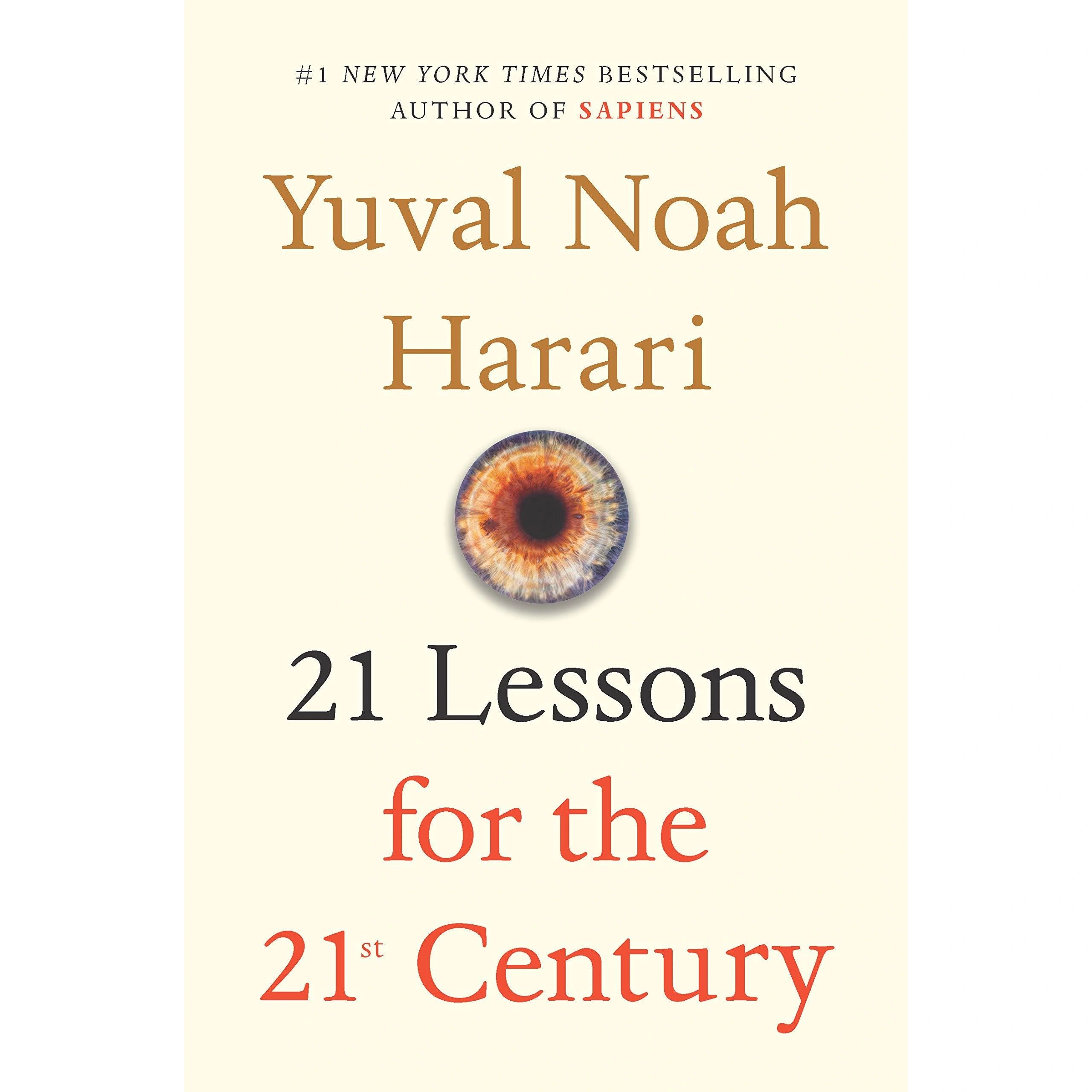
As with all of Yuval Noah Harari’s books, ‘21 Lessons for the 21st Century’ is an incisive exploration of complex issues. The benefits of Harari’s substantial experience as a meditator are on display, as he demonstrates a clear-sighted appreciation for the interconnection of disparate ideas. This newest book tackles controversial and expansive topics ranging from nationalism, immigration, religion, god, work, to meaning itself. Although he (or perhaps more accurately, his publisher) titled the book ‘21 Lessons for the 21st Century’, a more accurate description of the book would be something like: ‘the exploration of 21 issues by an insightful individual who teases out a few key lessons here and there.’ Indeed, it is often times difficult to draw concrete lessons from the book, which makes the title somewhat disingenuous and may aggrieve some readers. However, there are certainly several overarching, and important, thematic lessons Harari intends for, and hopes, the reader will take away.
The first revolves around what Harari deems to be the end of liberalism. After handily overtaking communism and fascism as the primary story of humanity, liberalism’s foundations have now been exposed as illusions. The fundamental illusory idea under-girding liberalism, that of the ‘free’ Homo sapiens, is no longer sustainable (this idea is captured by such slogans as ‘the customer is always right’ and ‘the voters know best’). Harari notes that twin revolutions in bio-technology and information-technology make persisting under this illusion not only untenable, but dangerous. As algorithms mature under the stead of Big Data and machine learning, companies and governments will soon be in the possession of tools that know Homo sapiens better than it knows itself. If Homo sapiens continues to persist in the belief that it is free, and to trust its feelings, it will be easily manipulated (as many already are) into performing at the behest of the algorithms and their owners. If Homo sapiens believes that the good feelings incited within it, upon watching a coca-cola commercial, are authentic reflections of who it is and what it wants, it is likely to unquestioningly associate coke with its good feelings and consume coca-cola products accordingly. In a virtual reality future wherein Homo sapiens’ brain is quite literally connected to the algorithms (e.g. a dystopian neural link system) this problem is poised to be greatly exacerbated. The implications for citizens living under aspiring totalitarian regimes is graver.
The second theme is that the meaning of life is not a story. Homo sapiens, Harari wittily states, is a post-truth species. Contrary to assertions that humans live in a unique period dominated by ‘fake news’, Harari notes that humanity has always relied upon and existed in conjunction with fake news. Referencing his foundational claim in his first book, Sapiens, Harari notes that Homo sapiens has been able to succeed so drastically relative to other species for one major reason: its ability to believe in and cooperate on the basis of shared fictions. Although humans often base their identities upon these shared fictions (whether they be stories about religion, the nation, or something else), the primary utility of these fictions has been to facilitate effective cooperation and social harmony. None of these stories, despite their utility (or, as is often the case, disutility) are true. Harari thus points out a major problem for Homo sapiens: realizing these stories to be the fictions they are would make it much harder if not impossible for large numbers of Homo sapiens to effectively cooperate. Harari offers an olive branch: if we organize around a shared enemy we could perhaps cooperate. Toward this end, Harari makes the claim that the most real thing in the world is suffering, and it is something vast numbers of Homo sapiens may be able to join and fight against. The three things most threatening to bring suffering upon Homo sapiens, Harari contends, are nuclear war, climate change, and technology. As much a lesson as a call to action, Harari tacitly implores Homo sapiens to disentangle their identities from fictional stories, recognize suffering as a primary problem, and unite to fight against the primary problems threatening to increase suffering (note: he does not come off as optimistic about this).
Finally, above all else, Harari recommends that we become much more self-aware. As the Bible implores us, ‘know thy self.’ Accomplishing this requires incorporating the lessons previously identified, and, even more importantly, requires coming to terms with the idea that what we often call ‘the self’ is indeed an illusion (i.e. “I” or “me”). Homo sapiens all have distinct self-identities crafted in the form of a story, which are often further buttressed by other fictional stories that find a place for that particular Homo sapiens in a larger cosmic drama that further gives that Homo sapiens’ story a role within the larger cosmic-story. These are all foundational fictions we should relinquish. In a lesson derived from his personal experience (having spent years of his life on silent retreat), Harari recommends meditation as a key to achieve this. Meditation, in essence the careful study of one’s own mind, allows Homo sapiens to see how little control one has even over one’s own thoughts, feelings, and attention. When such a foundational lack of control is revealed to the Homo sapiens it becomes much easier to question the fictions that Homo sapiens often unquestionably adopts about itself, the world, and its place in the world. Ultimately, Harari paints this as a race for the very essence of our species. If Homo sapiens does not win the race of self-awareness and discover the truth about its lack of free will (i.e. that Homo sapiens does not craft its own wants / desires / ambitions / self-images, etc), Homo sapiens may end up being manipulated by ultra-sophisticated algorithms in ways far deeper and more insidious than any dictator, regime, corporation, or religious sect thus far has every even dreamt of. Meanwhile, Homo sapiens may remain blissfully ignorant of the fact, operating under the happy liberal illusion of its own free will. A Brave New World dystopia may await Homo sapiens (echoing Harari’s previous book, Homo Deus) if it does not heed the assorted lessons found in Harari’s book.