The Great Wall Mentality
A review of Julia Lovell’s The Great Wall
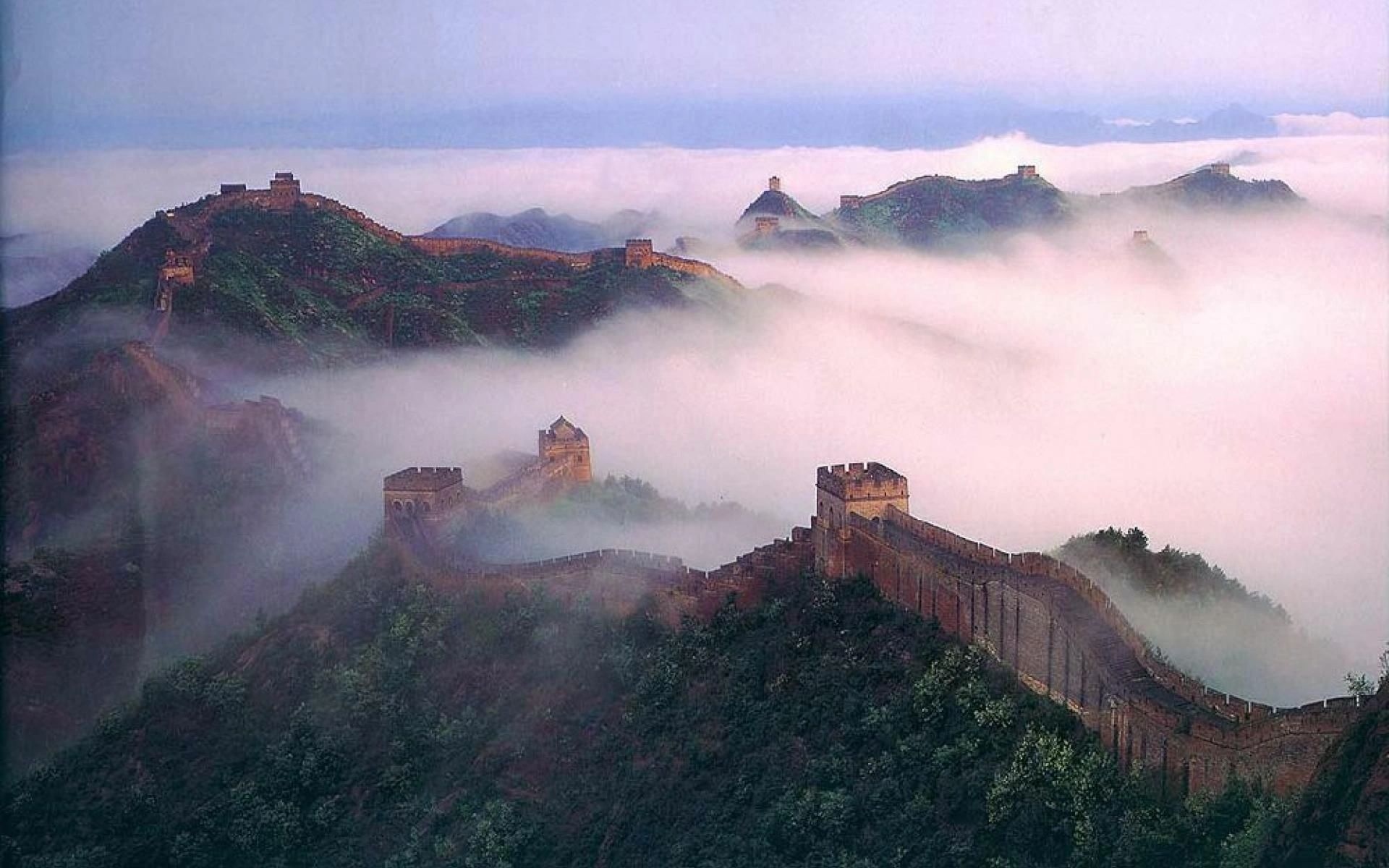
I recently wrote a review of Peter Frankopan’s The Silk Roads. In that review I discussed my reactionary reasoning for increasing my study of history. Of utmost importance was to forestall its misapplication—or misappropriation—by others. I appear to have joined Julia Lovell as a fellow traveler. Her book The Great Wall: China Against the World 1000 BC—AD 2000 is a treatise on dismantling bogus historiography. In it, she trains her talented analytic and research skills on tearing down the narrative myths and falsehoods that have buttressed China’s most iconic landmark(s).
Most every major country has an iconic landmark. For America it’s the Statue of Liberty, for France it’s the Eiffel Tower, and for India it’s the Taj Mahal. One thing these landmarks have in common is a definite history, in large part owing to their relatively recent construction. The Statue of Liberty was gifted to America by the French in the 19thcentury, the Eiffel Tower was built in France in the 1800s, and even the Taj Mahal was constructed by India’s Muslim Emperor only in the 16thcentury. They are also definitively located: they are contained in a particular geographic area from which people can see them in their entirety.
To wit, China’s great wall is none of these things. As the story goes, China’s great wall is thousands of years old, dating back to the Qin dynasty and its first Emperor Qin Shihuang in 220 BC (the centralized, bureaucratized, legalist, unifying dynasty that emerged from China’s ultra-bloody Warring States period). It is also, and obviously, not constrained to a geographic location from which one person can observe it in its entirety. It is the grandiosity of the thing, its sweeping existence across both time and space, that lends it an air of mystique as a national symbol. The result has been grand soliloquizing and bombast, up to the most shocking claim, repeated many times over, that it is the only man made monument that can be seen from space!
From the outset, Julia Lovell goes about dashing historical malapropisms. First on the chopping block is the idea that ‘The Great Wall’ is in fact a single wall. It is, and always has been, rather a patchwork of many walls that do not connect, often with gaping holes. Second, and closely connected, is the fact that while a first version of a patchwork of walls was indeed created by Qin Shihuang’s Qin in the 3rd century BC, that wall no longer exists. Indeed, the subsequent Han Dynasty went on to build twice as much wall (roughly 10,000 li) as the Qin dynasty did.
Similarly, unlike the grand images of the wall, most of the wall that was constructed thousands of years ago looked nothing at all like the parts of the wall at contemporary tourist spots near Beijing (e.g. Bandaling). Rather, the wall was hastily built via the ‘tamped earth’ method, wherein corvée laborers utilized the local terrain, i.e. dirt, piled it up and tamped it down, and then put some combination of mud, sun or kiln baked bricks, and woven twigs to cover it from the outside. The walls were often not more than 3 meters (9 nine feet) tall. By the time the wall builders of the Ming dynasty started building in the mid to late 1500s, most of these primitive walls were degraded, broken down, or long gone.
Thus, nearly all of the wall that remains dates back to the Ming Dynasty of several hundred years ago, not to the Qin dynasty of 200 BC, putting the date of construction of China’s national symbol on the order of the Indian, French, and American symbols. Most disappointing of all, ‘the Great Wall’, in addition to being neither continuous in time nor space (i.e. does not date from 200 BC and is not in fact a single large wall), is not visible from outer space.
The mystique of the Great Wall was cultivated in large part by erstwhile Jesuit priests, mostly Portuguese and Dutch. Ironically, most of these Europeans had never actually traveled along its perimeter. Rather, they had seen it only from their comfortable encampments in and around Beijing. In Lovell’s telling, the Europeans were also plagued with tacit motives for writing gushingly grandiose reviews. In particular, the Jesuit order’s concern that the missionaries were enmeshing too much with Chinese cultural practices. Thus, in order to both justify their enmeshment and their efforts in China, they wrote effusively of this symbol which, in their view, encapsulated the civilized aspects of China. They were also, Lovell argues, ingratiating themselves with the Chinese imperial court, stroking the inflated ego of a Chinese cultural mindset which long fancied itself as the center of the world. In this, one could find a contemporary parallel with obsequious business leaders and corrupt politicians who endeavor to get in on the Chinese market. (Mark Zuckerberg on Xi Jinping’s Governance of China: “”I’ve bought copies of this book for my colleagues as well. I want them to understand socialism with Chinese characteristics.”)
Throughout the book, Lovell skillfully relies on the fragmented dynastic history of wall building to weave an abridged narrative of Chinese history overall. In effect, using the wall(s) as a prop for her narrative arc. In so doing, she compellingly demonstrates that the walls, and the efforts expended to build them throughout Qin, Han, Sui, Tang, and Ming dynasties, were often counterproductive. Far from ensuring the security of the empires the walls were constructed to defend, they often exacerbated their decline.
Successions of steppe and horse-riding nomads conquered China from North of the Yellow River. Beyond the constant raids, some key examples: the Xiongnu nealy conquered Han from Mongolia, the Khitan Liao held the northern territory above the Northern Song, the Jin conquered the Liao and vast swaths of Northern Song territory from Manchuria, the Yuan descended from Mongolia to conquer all of China, as did the Qing from Manchuria. A consistent theme of the book, however, is the difficulty these conquerors had in sustaining their martial prowess over time, as they increasingly fell victim to political decay, corruption, fracturing into fiefdoms, and general decadence. A cycle seems apparent: a martial empire, forged often in the ‘barbarian’ wilds of the north, would rise and consolidate its northern rule and then sweep across mainland China, only to eventually, over the coming century, fall victim to the decadence of settled life, lose its martial ways, and have its yoke overthrown. The Ming, though one of the only dynasties whose founder (Zhu Yuanzheng, the Hongwu Emperor) rose to power from the south, followed a similar cycle. The walls, then, became a sort of tacit admittance—if not outright signal—of an empire’s military impotence.
Perhaps the most significant thing lost in the glorification of China’s walls is the human story. How did these walls get built? Lovell traces several fantastical accounts, my favorite being a giant dragon that flew over-head, eventually plopping down on the hilly, northern frontier, becoming the spines of the wall. Certainly, the visual image of the walls traipsing over mountains like a ridged spine does give it the look.
Alas, the walls were built, across successive dynasties, in a much more prosaic manner: corvée labor. Across time and place hundreds of thousands of Chinese people were forced, without pay, proper clothing, or even food, to build these walls. The result was massive suffering and death, of which an accurate accounting is probably not possible. Just as many other great historic projects, such as Russia’s trans-Siberian railroad and St Petersburg canals, are built upon thousands of bodies carelessly sacrificed for the cause, so to were the Chinese border walls.
How long do you think it would take for a rag-tag band of 50 Xiongnu, Manchus, or Mongols to dismantle a 10-foot-high by 5-foot-thick, tamped earth wall so their company could ride through it? Probably not too long. As a result, the hastily assembled walls also had to be continuously manned. Lovell offers some of the more poetic accounts of the Tang dynasty (known of course for its poetry), wherein Chinese conscripts describe a barren, northwestern landscape they were most unhappy to find themselves forced to station. Indeed, throughout Chinese history, manning the northern border walls tended to be considered a torturous assignment, if not an outright death sentence. Most wished their families goodbye and put their affairs in order, justifiably unsure if they would ever return. The most harrowing accounts, though, come at the end of the Ming, when the dynasty is collapsing as a result of greed, nepotism, and incompetence. Border guards went unpaid for months, did not receive needed winter clothing supplies, and had no food deliveries. Thousands starved or froze to death, with final letters to families proclaiming how lonely, cold, and hungry they were. Under these conditions, many not only looked the other way when enemies from the north attacked, they simply abandoned their posts. Though doing so was a sure death sentence if caught, so was staying.
Despite the ignominious history of these Chinese walls, the Chinese Communist Party (CCP) nonetheless uses ‘the Great Wall’ as a national symbol of pride. As Mao proclaimed, and as the CCP has done in so many other respects, the Party is appropriating history and warping it to serve its interests, or as Lovell states: “his deeply Chinese regard for harnessing history to serve the present” pg 322. As Lovell poetically puts it, the CCP has cultivated and enforced a ‘socialist culture that has no interest in encouraging people to think critically or creatively about their past, [it] wants people to fix hopeful eyes on their tomorrows rather than questioning eyes on their yesterdays.” This CCP version of the ‘Great Wall’ ironically accords far more with the ‘Western imperialist / missionary’ version of it than it does with historical reality. In order to ensure that history and narrative align, the CCP has rebuilt and spruced up the tourist attraction parts of the wall near Beijing, to foster the historically preferred version of events. Mao Zedong once said that he was “half Karl Marx and half Qin Shihuang.” He and the Party have no qualms with building walls.
Indeed, just as China’s imperial paranoia complex historically manifested in building insolating walls in concrete (or brick) form, today such wall building takes on a virtual form. The Great Firewall is designed to insulate the ‘Chinese people’ from corrosive Western influence. In truth, though, just as before, such wall building is about sustaining a deeply insecure power hierarchy. River Elegy, a 6-part TV series that aired prior to the Tiananmen massacre and that was denounced by the CCP for fomenting the unrest, asked a penetrating question:
“if the Great Wall could speak, it would very frankly tell its Chinese grandchildren that it is a great and tragic gravestone forged by historical destiny…it can only represent an isolationist, conservative, and incompetent defense and a cowardly lack of aggression…Alas, O Great Wall why do we still want to praise you?”
The series also asked, rhetorically, “How many tragicomedies of history have been played out before the backdrop of the Great Wall.” Yet the wall also reveals something highly relevant to modern times, something that Democracy activist Huang Xiang noted: the “Great Wall mentality from the inside: [it represents] the impulse to lock the Chinese in, both away from foreigners and away from each other.”
The final passages of the book are so good, and impinge so strongly upon the present moment (despite being written in 2006) that they are worth reproducing at length:
“What seems safer to predict is that, whether or not China’s most recent wall to see active service crumbles, and with it the regime it protects, the political and cultural worldview that Chinese wall-building has long expressed will, in some form or other, survive; that the now familiar oscillation of policy—between offence and defence, between openness and isolationism, between hunger for foreign exotica and delusions of self-sufficiency—over which millennia of arguments about frontier walls have presided will continue.
It is probably fair to say that, in surviving through and out of the twentieth century, the enduring Chinese love of walls—the embodiment of the imperial, Sinocentric attitude to the outside world—has passed its greatest test and proved its ability to transcend almost any geopolitical circumstances. By emerging as china’s pre-eminent national monument while the country struggled to slot, for the first time in its history, into a modern system of international relations beyond its own dictation of terms, by adapting itself to the globalized world and its new, virtual flows of information, the idea of the frontier wall has proved its distinctive, universal appeal to Chinese through the ages. The bizarre cocktail of cultural and political forces currently at work in contemporary China—where powerful yearnings for international ‘face’ (Nobel Prizes, a Beijing Olympics, entry to the World Trade Organization), for foreign goods and study abroad coexist with periodic eruptions of anti-foreign feeling and with anger against an America seen as seeking to contain a rising China—is, perhaps, only another, albeit more extreme, version of the pull between enclosure and openness that has been asserting itself since, at the very least, King Wuling of the state of Zhao began his court debate about the virtues of the nomadic tunic.
It is, admittedly, a version whose most obvious contradictions and schizophrenia are accentuated by the accelerating processes of globalization, by China’s increased and enforced exposure to international influences and by the rise of narrower, more tightly defined and legislated modern expressions of national identity. But we see this same tension between the foreign and the Chinese reappear again and again across the millennia, too often for its contemporary manifestations to be mistaken for a new phenomenon: in the near-simultaneous adoption of barbarian cavalry and wall-building as military strategies during the Warring States period; in the Han opening of the Silk Road, walled and superintended up to the edge of the Taklamakan by towers and ramparts of reeds and clay; in the Northern Wei’s shrinking from their ancestor’s nomadism into walled Chinese cities behind border walls; in the Sui Emperor Yang’s expressions of delight at the tents, muttons and wine of the steppe, even as he dispatched a million Chinese to wall off his yellow plains from the Turkish barbarians; in the volte-face from the adventurous treasure ships of the early Ming to the thousands of kilometers of mud- and brick-walled frontier built by the time the dynasty fell in 1644.
The internationalism and isolationism that have converged around Chinese wall-building recall also the doubled-edged way in which walls have functioned across the millennia of Chinese history, and still do today in the case of Israel’s ‘defensive’ fence: not only to protect (sometimes oppressively so) those peoples ruled by the wall-builders but also—depending on the distance of a wall from those it supposedly defends—to prop up a strategy of imperialist expansion, to garrison and superintend foreign neighbors whose way of life differs threateningly from that of the wall-builders.
If, then, we sidestep the stridently nationalistic purposes to which some of present-day China’s more propagandistic commentators have put the wall, if we don’t allow the controversy-ridden and often inglorious past to be obscured by the contemporary bombast of the Communist tourist industry, some of the multipurpose, seemingly contradictory claims currently made for the frontier wall begin, finally, to seem a little more reasonable. Although it is still stretching a point to argue that China’s border walls defined a single, unified China while simultaneously nurturing a multicultural internationalism, it is possible to say that these two contradictory impulses have often coexisted, or closely alternated, throughout Chinese history, weaving in and out of the rise, fall and rise again of wall-building. And the persistent reappearance of walls along the Chinese frontier—despite their liability to bankrupt their builders, to foster and exacerbate internal discontent, to encourage Chinese rulers to abandon the kinds of diplomatic compromise that have historically been far more effective at keeping the peace than haughty, myopic isolationism, to fail as defences when (inevitably) confronted by a mobile, determined, battle-hardened enemy, to fall down—has made them a constant across Chinese history, an almost unthinking, undeniable cultural habit that China’s rulers, and some of its people, seem unable and certainly unwilling to kick.
In the century to come, when Chinese nationalism and internationalism promise to become key geopolitical forces in the world, understanding China’s millennia-old vacillation between openness and enclosure, and its confidence in its ability to attract and civilize foreign acolytes while continuing to regulate what it allows inside its own frontiers, will become increasingly important to maintaining perspective on China’s approach to both domestic and global affairs. This book has tried to provide a history of the Chinese worldview, to reveal its successes and failures, to explain an attitude to the outside world that can seem (and, indeed, often I s) puzzling, contradictory and strident, and that shows no sign of evanescing in the face of globalization, the Internet and America’s world crusade for freedom and democracy. Even if, over the next decades, the People’s Republic were straightforwardly to transform itself into a democracy along the open, Western, liberal or George W Bush model (a proposition that in itself looks simplistically far-fetched), the Chinese empire has too much history and too much historical awareness to abandon its millennia-old behavioral tics, to lose faith in either its own cultural and political uniqueness, or the need to maintain lines of exclusion and rigorous border controls, physical or psychological, through which to monitor its inevitable droves of visitors, whether they be admiring bearers of tribute, hopeful traders or green-eyed aggressors. China will, it seems, always have its Great Walls.“
In the final analysis, the Great Wall of China was neither particularly great, nor a singular wall. Official historian of the Qing, Wan Sitong, the Manchu-run empire that conquered the wall building Ming, poetically summarizes the Chinese history of wall building:
“The men of Qin built the Long Wall as a defence against the barbarians.
Up went the Long Wall and down came the empire.
People are still laughing about it today.
Who would have imagined, then, that the Ming, to protect themselves from northern enemies,
Would also decide building walls was the answer to all their problems.
They called theirs the border wall, instead of the Long Wall.
Endlessly they built walls, without ever pausing for breath.
As soon as it was announced the walls were built in the east
It would be reported that hordes of barbarians had raided in the west.
They rampaged through collapsed walls, as if over flat ground,
Plundering whatever and wherever they liked.
When the barbarians retreated, up went the walls again.
The builders worked from dawn till dusk, and what was the use?
The gentry and ministers all squandered government funds
Wasting money needed for farming.
Why did we build walls for 10,000 li?
Dynasty after dynasty has done the same thing.
So why do we only laugh at the First Emperor of Qin.“